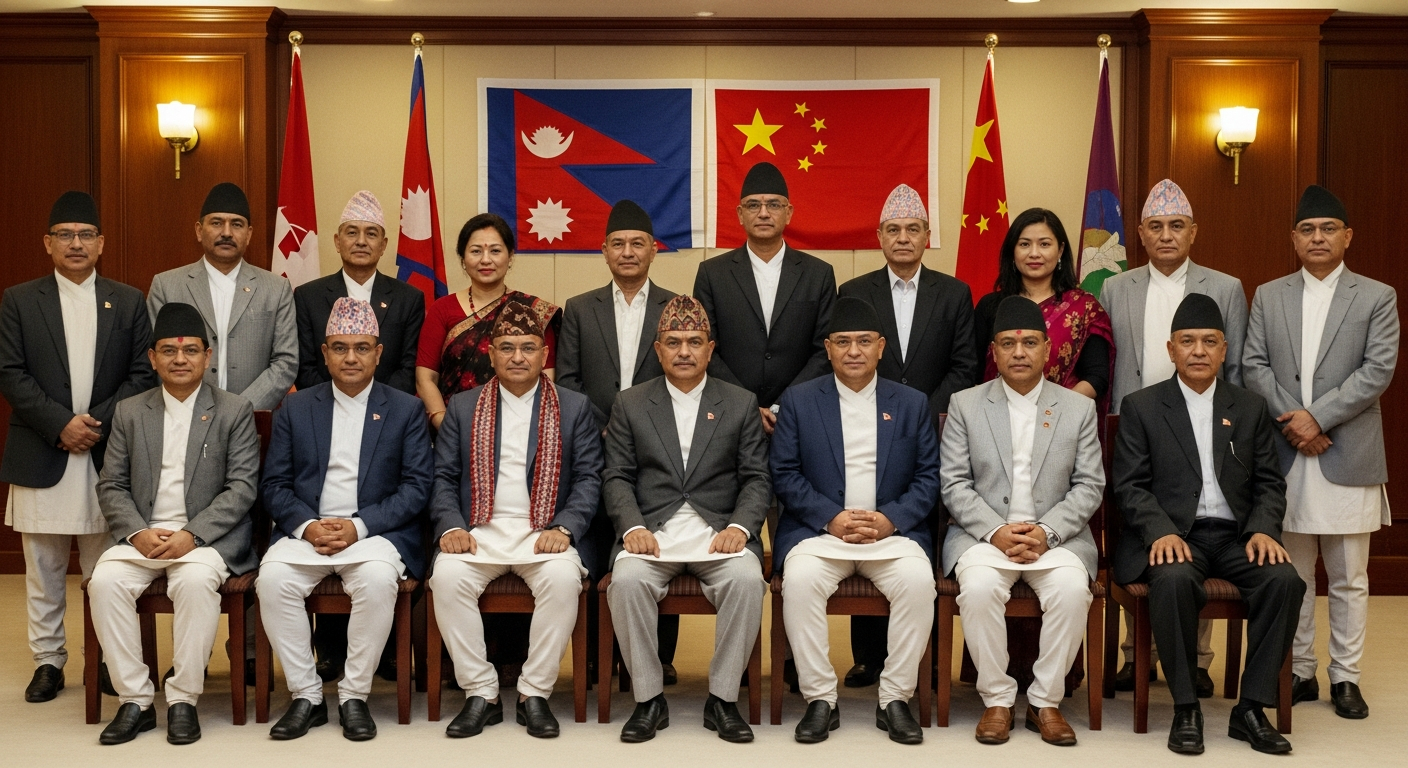
The founding executive committee of Nepal China Academy served from 2005 to 2009, establishing the institutional charter, organizational bylaws, and the foundational programs that would define the Academy’s mission for decades to come.
A Vision Takes Root
Under the leadership of President Dr. Keshav Prasad Ojha, the inaugural committee brought together educators, diplomats, and cultural advocates who shared a conviction that stronger Nepal-China ties would benefit both nations’ academic and cultural landscapes. The committee’s earliest sessions were held in borrowed conference rooms in Kathmandu, fueled by conviction and strong tea rather than institutional resources.
Within its first year, the committee drafted the Academy’s constitution, secured formal registration with the government of Nepal, and organized the inaugural Nepal-China Friendship Lecture — an event that drew over two hundred attendees from academic, diplomatic, and business communities in the Kathmandu Valley.
Committee Roster
- President: Dr. Keshav Prasad Ojha
- Vice President: Prof. Sarita Devi Shrestha
- General Secretary: Mr. Nabin Kumar Tamang
- Secretary: Ms. Kamala Rai
- Treasurer: Mr. Hari Bahadur Karki
- Executive Member: Dr. Bindu Lal Joshi
- Executive Member: Ms. Renu Maharjan
- Executive Member: Mr. Deependra Man Shakya
- Executive Member: Prof. Gyanendra Bahadur Basnet
- Executive Member: Ms. Sushila Thapa
Key Achievements
The first committee’s legacy extends well beyond its administrative accomplishments. By formalizing the Academy’s charter with explicit objectives spanning academic cooperation, cultural exchange, language promotion, and trade facilitation, the founding members created a durable institutional framework that every subsequent committee has built upon.
We did not merely establish an organization — we planted a bridge between two ancient civilizations, trusting that those who came after us would build upon its foundations.
Dr. Keshav Prasad Ojha, Founding President
Among the committee’s defining milestones: the signing of a preliminary memorandum of understanding with the China–South Asia Cultural Exchange Centre, the launch of the Academy’s first newsletter, and the organization of three bilateral friendship programs that brought together scholars from Tribhuvan University and Beijing Foreign Studies University. These early connections laid the groundwork for the scholarship and delegation programs that would flourish under subsequent leadership.